Star of the Show
3 minute read
Art
Design

Written by Murray Crane
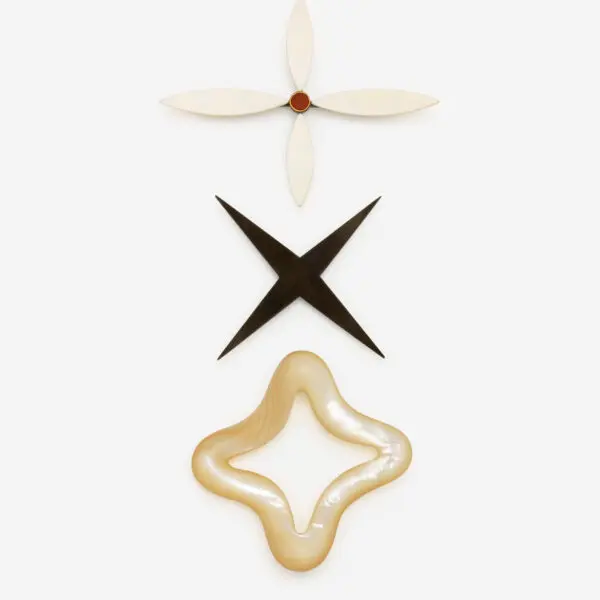
I have spent a lifetime working with artisans and makers from all over the world. Cloth mills in Italy and England, knitters, shoemakers, pattern cutters. Over time you develop an instinct for discipline in craft. You begin to recognise when something is decorative, and when it is deliberate. So when I stand in front of these three brooches by Warwick Freeman, Soft Star and Hard Star from 1991, and Flower Star from 1992, that is the lens I bring.
For me, they sit almost like a triptych. They hold the wall together as a group. There is a visual conversation between them. Hard and soft. Dark and luminous. Centred and open. But I am aware they were not conceived as a set. They were created independently, at different moments, and yet they speak to one another. To me, that is the mark of a sustained practice. When individual works, made separately, can sit together decades later and feel coherent. Not because they were designed as a series, but because the maker’s language is consistent.
The star itself is an ancient and heavily loaded symbol. It arrives with meaning attached. Navigation. Nationhood. Authority. Faith. For me, what Freeman does is refuse to accept that meaning as fixed. He tests it. In the Hard Star, I see decisiveness. The points extend sharply. It feels structured, almost confrontational. The material is stainless steel, which gives it a clarity and precision that reinforces that sense of structure. It reads as firm and resolved, almost architectural.
In the Soft Star, the geometry relaxes. The edges round. The mother of pearl absorbs light rather than projecting it. For me, it feels worn down by time, almost tidal. The same motif, but softened into something intimate. Then the Flower Star introduces a centre. Red jasper held in gold, framed by pale shell. It acknowledges jewellery history more openly. I see ornament here, but still controlled. It sits between bloom and emblem, decorative and declarative.
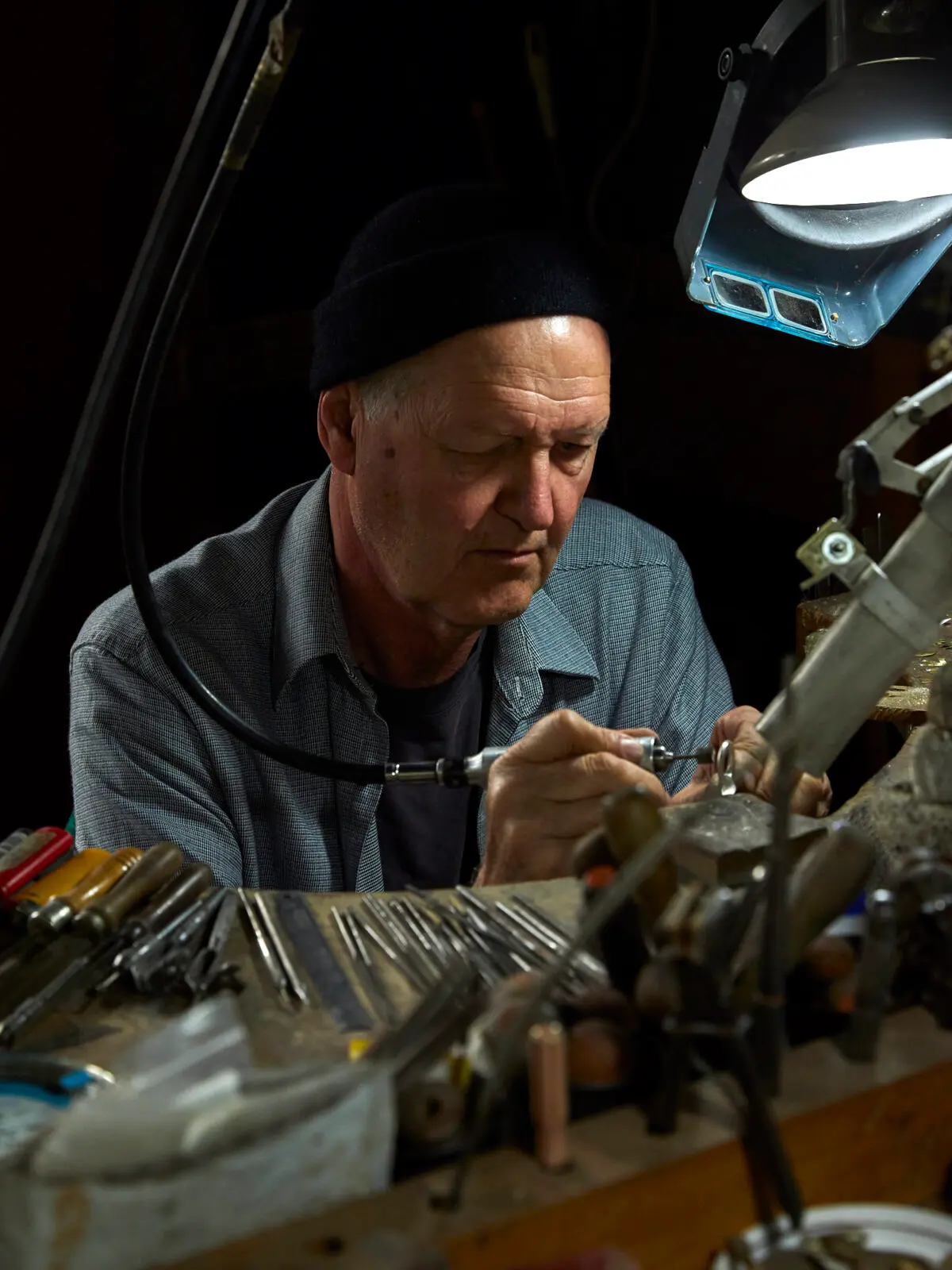
Seen together, they feel balanced, like panels in a quiet altar. But knowing they were made independently makes that balance more compelling. It suggests a maker returning to forms over years, refining them, adjusting them, allowing them to evolve without losing clarity. In my view, sustaining a practice over more than forty years requires that kind of focus. It means working through multiple commissions at once. It means producing steadily, year after year, while maintaining coherence. Across that span, there would be hundreds of thousands of pieces made. Each one leaving the bench and entering someone’s life.
For me, that is the true scale of the work. These brooches are not static. They are worn. They are chosen to mark milestones. Weddings. Anniversaries. Departures. Arrivals. They sit close to the body at significant moments. Over decades, they form a dispersed archive of personal histories.
So while these three pieces sit here today like a considered triptych, I see them as part of something much larger. A lifetime refining a language. Hard. Soft. Centred. Open. Small shifts in edge and material alter meaning entirely.
For me, that is what gives them authority. Not that they were designed to belong together, but that they do naturally, because the maker’s voice is clear and sustained. That is what I admire most.
Images by Samuel Hartnett