Living in a High Rise
4 minute read
Fashion
Written by Murray Crane
An old Savile Row trained tailor who constantly corrected me in the early part of my career put it simply. Trousers are like a pendulum, he said. They need to swing. Slim and skinny makes way for something fuller, and in time the fuller shape gives way to slim again. It is a shape menswear has already worn before, and is wearing again.
In pattern cutting terms, rise is measured from the crotch seam up to the top of the waistband, taken separately as a front rise and a back rise along the seat seam, usually with the client seated to capture the true measurement. I think of it as the foundation of the whole garment. Get it right and the jacket, the shirt, and the leg line fall into place around it. Get it wrong and no amount of work elsewhere in the suit will fix the proportion.
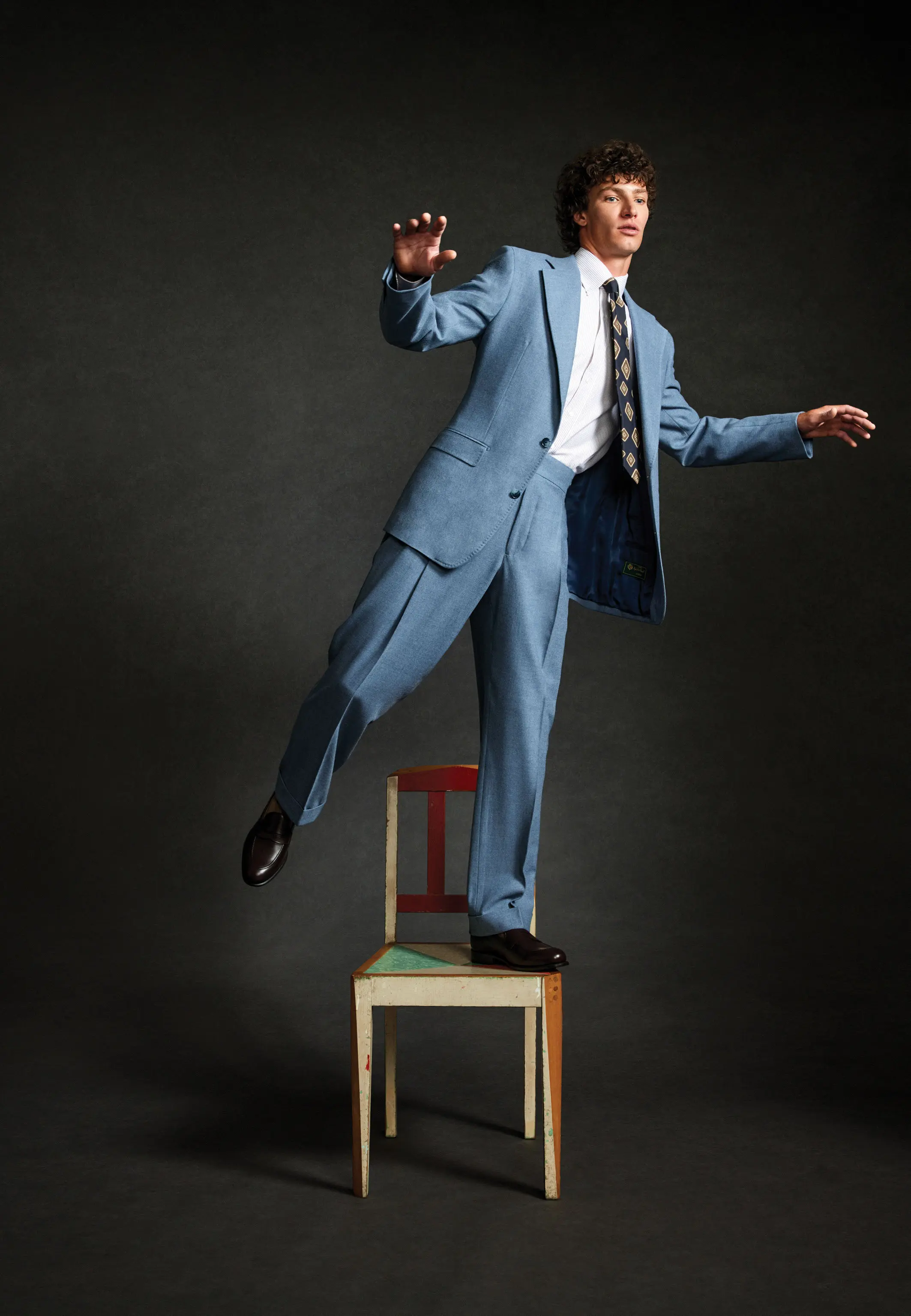
A high rise sits at or near the natural waist, the narrowest point of the torso, roughly level with the navel. That is where trousers sat for most of the twentieth century, because it is where the body actually curves in and gives a waistband something to hold on to. A trouser cut two or three inches below it has nothing to hold on to, which is why low rise trousers rely on a belt cinched against gravity rather than a waistband that fits.
I have watched the trouser drift south for the better part of twenty years. Rise dropped, waistbands settled on the hip, and the shirt was left to do the work the trouser used to do. When I started my career, the flat fronted trouser was a novelty, the modern alternative to the pleated, fuller cut most men still wore without question. It took the best part of two decades for that novelty to change into the only option on the rail.
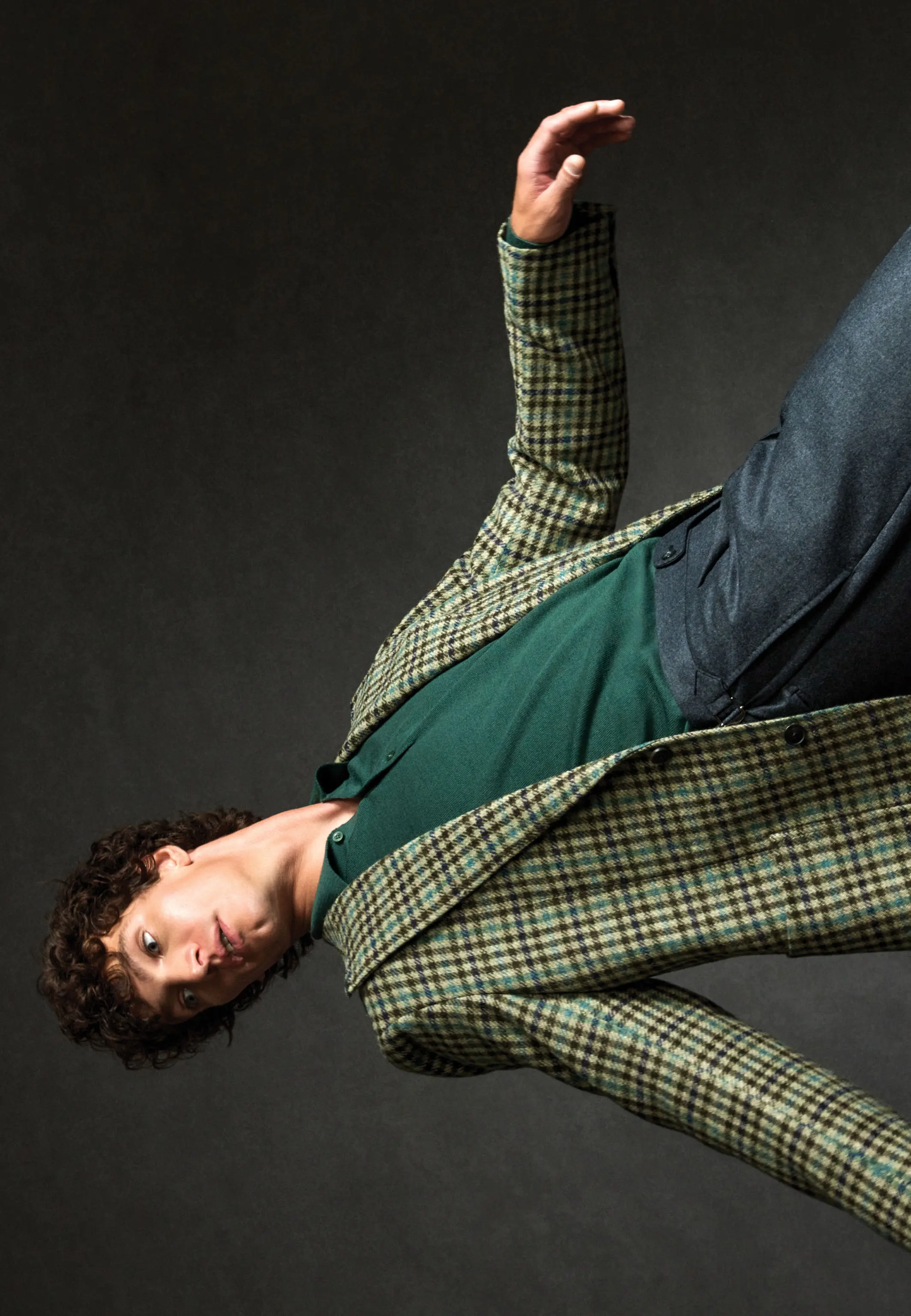
The pendulum has reached the top of its arc. Higher rises are appearing again on the runway and in the better ready to wear ranges, and the natural waist is once more the reference point rather than the exception. I do not read this as a nostalgic revival. It is the trouser returning to the proportion it was cut to for most of its history, after two decades spent somewhere else.
When a trouser is cut at the natural waist, the leg reads longer, because the trouser is claiming territory that used to belong to the shirt. There is no wedge of shirt showing below the jacket button, no break in the line from shoulder to shoe.
The trouser also holds its line properly through the seat and thigh, because a high rise gives the cutter room to build in fullness without the fabric bagging at the crotch. This is why the slim, low rise trousers of the past two decades were cut narrow through the leg almost of necessity. The leg was narrowed to compensate for a rise that had already dropped, and I always thought it was the wrong way round.
A trouser at the natural waist also works with a jacket the way it was designed to. A jacket's stance, its button height, was always cut to sit just above the trouser waistband, not above a belt buckle on the hip. Move the trouser down and the jacket's proportions stop making sense, however well the jacket itself is cut. I do not judge a jacket and a trouser separately, and I would encourage anyone who does to stop.
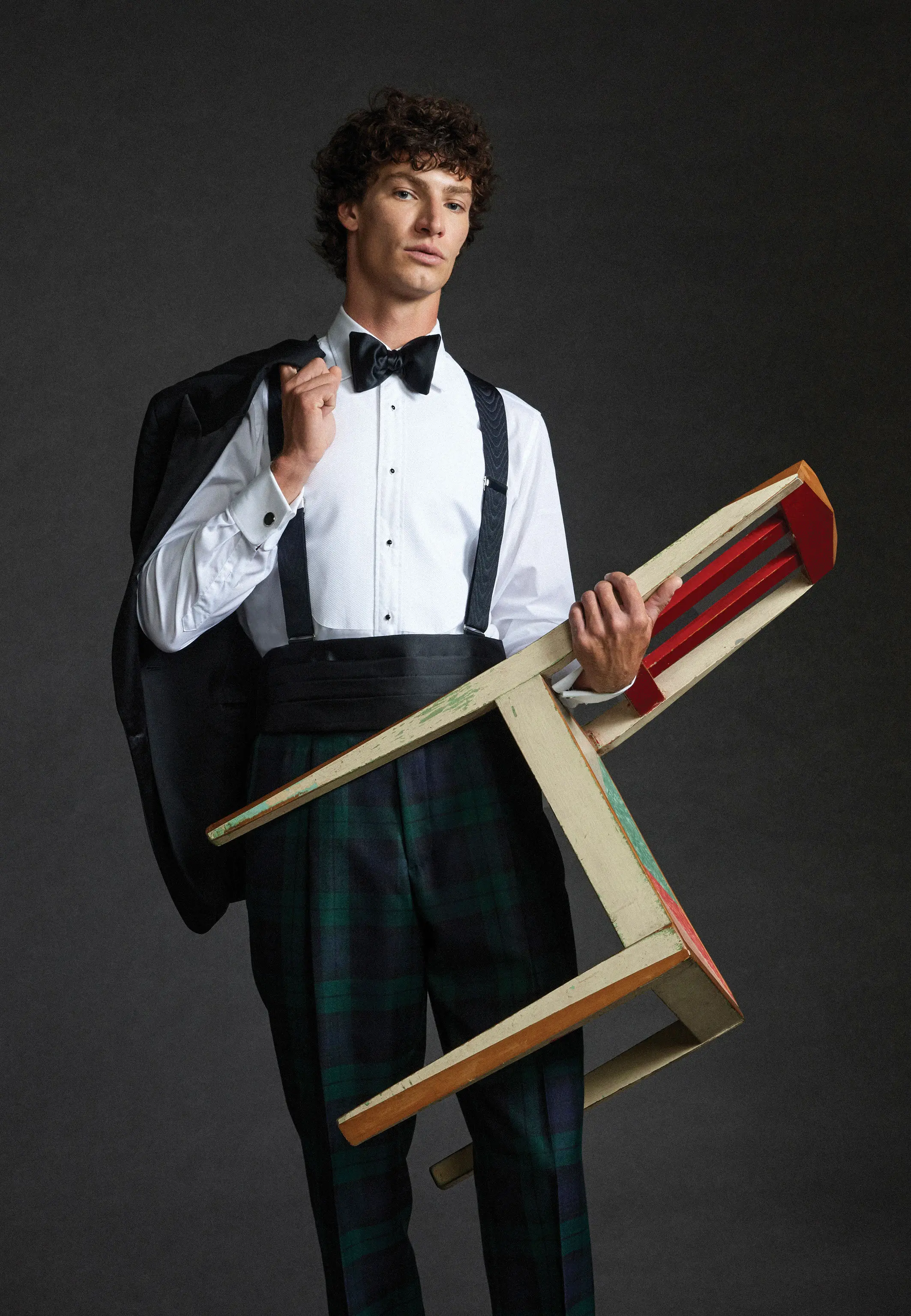
Rise matters most in a suit built for a formal occasion. A wedding, a black tie dinner, a client meeting, these are not settings for a trouser that needs constant hitching, or a gap of shirt appearing every time a man sits down. Formal tailoring only works as a system, jacket and trouser cut to the same stance, and the rise is where that system holds together or doesn't.
This is how I ask a formal fitting to be run. Start at the trouser, not the jacket. Confirm the rise before anything is pinned above it, then let the mirror do the arguing: the leg line lengthens before a word is said about natural waists.
The pendulum has swung back. It is time to prepare for a modern high rise existence.